
Introduction: The shifting ground beneath our feet
The rules of digital marketing are changing faster than most teams can keep up with. What worked last year can suddenly stall, and relying on 2024 playbooks is a fast path to stagnation.
This post breaks down five major marketing shifts that will define success in 2026 and turns them into concrete moves you can implement now. The aim is to help you stop reacting to constant change and start building a strategy that’s aligned with where attention, algorithms, and AI are actually heading.
1. Your social media goal is no longer a website click
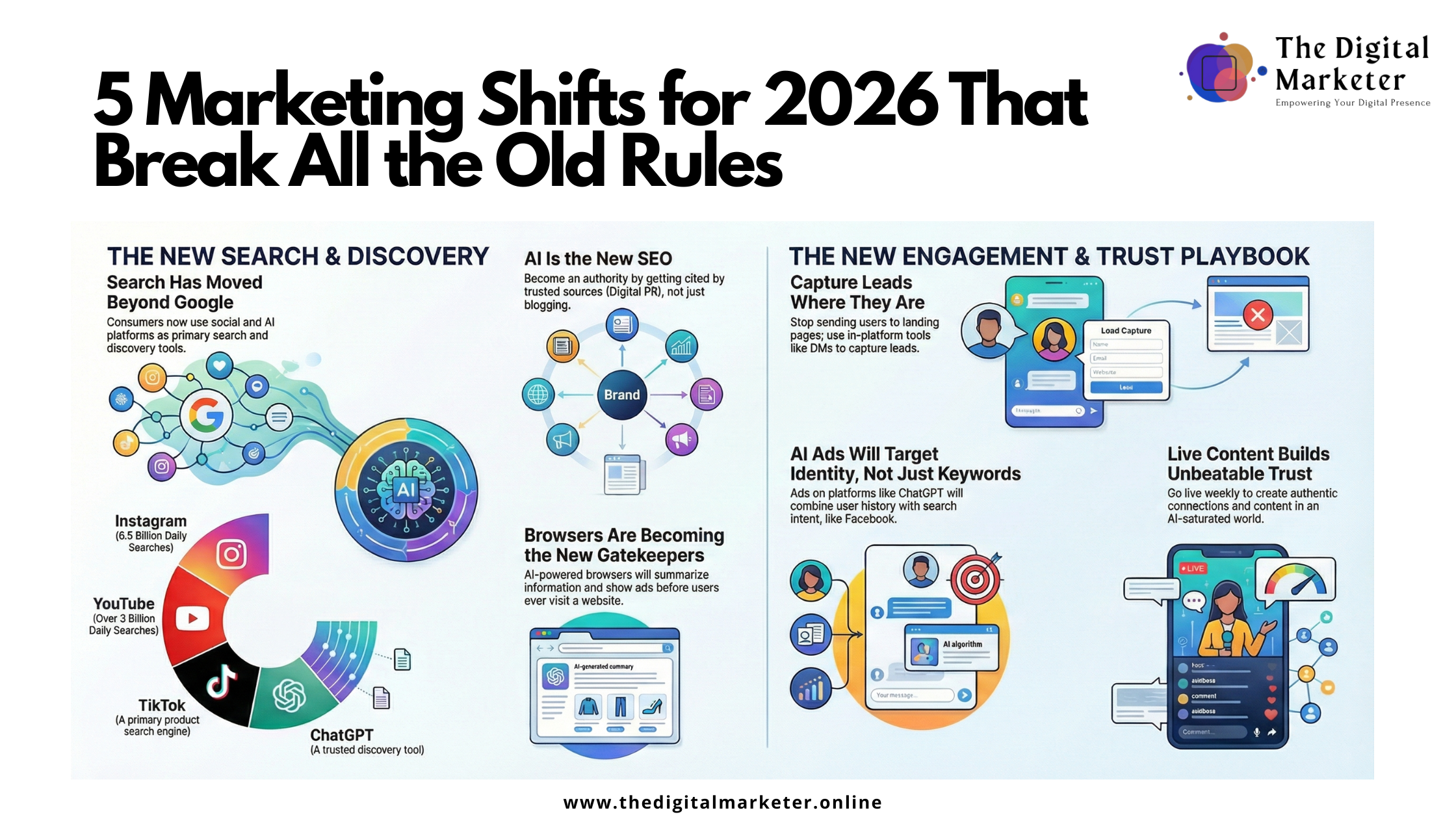
For years, the default social media objective was simple: post content, get the click, send people to a landing page. In 2026, that approach is actively working against you on most major platforms. Social networks want to keep users inside their ecosystem, so posts that push traffic off-platform often see reduced reach and higher costs.
The new game is on-platform capture and nurture. Instead of forcing every interaction back to a website, use:
- Comment-triggered DMs and chat flows to collect emails or qualify leads without opening a browser
- Native lead forms and in-feed “zero-click content” that delivers value without requiring a click-through
By reducing friction and respecting platform incentives, you generate warmer, higher-intent leads while training the algorithm to show your content to more people.
2. The real AI problem isn’t replacement, it’s “slop”
AI was supposed to make marketing faster and easier. In reality, many teams are drowning in what’s now being called “AI slop”—content that looks polished on the surface but is vague, error-prone, or indistinguishable from everything else. This kind of output creates more work: fact-checking, rewriting, and salvaging brand voice.
The most effective teams aren’t handing the keys to AI; they’re using it as an accelerator. They rely on AI for ideation, outlines, research summaries, and first drafts, but keep human judgment in charge of:
- Final messaging, narrative, and positioning
- Accuracy, nuance, and brand tone
In 2026, the competitive edge isn’t “who uses more AI,” but “who maintains higher standards while using AI intelligently.”
3. The new SEO is optimizing for AI, not just Google
Search is no longer just about ten blue links on a Google results page. Discovery now happens through AI assistants, social search, short-form video, and aggregator platforms, alongside traditional search engines. The emerging mindset is “search everywhere optimization” rather than SEO in the narrow sense.
To become the type of source that search engines and AI models like to surface and cite:
- Publish highly specific, intent-matched content (for example, niche listicles, deep-dive guides, or narrowly focused “best of” pages)
- Invest in digital PR and third-party citations, so other credible sites link to and reference your content
- Structure pages with clear headings, bullets, FAQs, and schema markup so machines can easily parse, extract, and reuse your information
The goal is not only to rank—you want your content to be the answer that powers summaries, snippets, and AI-generated responses.
4. Your website is becoming a database, not a destination
With AI increasingly baked into search results and even browsers, more users will get what they need from synthesized answers without ever clicking through to your site. That doesn’t mean your website stops mattering; it means its primary job is shifting.
Think of your site less as a brochure and more as a structured knowledge database. Priorities for 2026 include:
- Implementing schema markup for articles, FAQs, products, reviews, and events
- Using clean semantic HTML and a logical heading hierarchy to clarify what each page is about
- Ensuring content is comprehensive, consistent, and easy for machines to interpret
When your site is built this way, AI systems and search layers can reliably pull from it, even if the user never sees your URL.
5. Language is no longer a barrier to global reach
For the first time, language is no longer a hard ceiling on your audience size. AI-powered translation and auto-dubbing tools can turn one piece of content into many localized experiences with far less effort than traditional localization. Creators and brands are already seeing a significant share of their views and leads coming from languages they don’t personally speak.
To unlock global reach, you can:
- Enable multi-language audio or subtitles on video platforms where available
- Use hreflang tags and language selectors so each audience sees the right localized version of your pages
- Localize calls-to-action, key offers, and trust elements to match the language and expectations of each market
This is more than a technical tweak; it’s a mindset shift from “local views” to global distribution by default.
From destination to authority: what actually matters now
The thread connecting these five shifts is a move from destination thinking to authority thinking. Instead of obsessing over how many people visit your site, focus on how often your ideas, data, and frameworks are the ones platforms and AI systems choose to surface.
That means:
- Designing content for on-platform engagement, not just outbound clicks
- Pairing AI speed with human standards to avoid feeding the internet more “slop”
- Building real authority through structure, depth, and external citations
- Treating your website as the structured source of truth for everything you want to be known for
- Thinking in terms of world reach, not just one language or region
In a world where AI and platforms are the gatekeepers, the key question is no longer “How do I get more traffic?” but “How do I become the source that’s worth being quoted, summarized, and shared—everywhere?”